Popular Front(s)
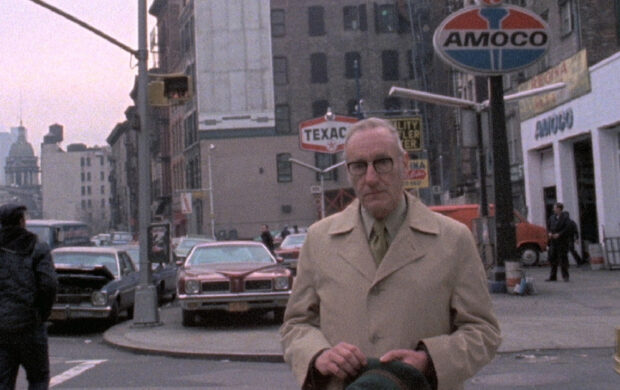
William Burroughs, doubtless more than any other, incarnates rebellion, the margin and refusal. He was the centrepiece of the Nova Convention held in New York in 1978. The found footage shot by Howard Brookner conveys to us some of the subversive, joyful and creative energy we are still eager to feed on today.
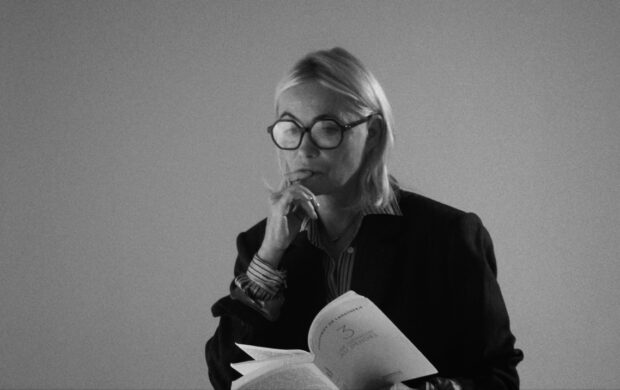
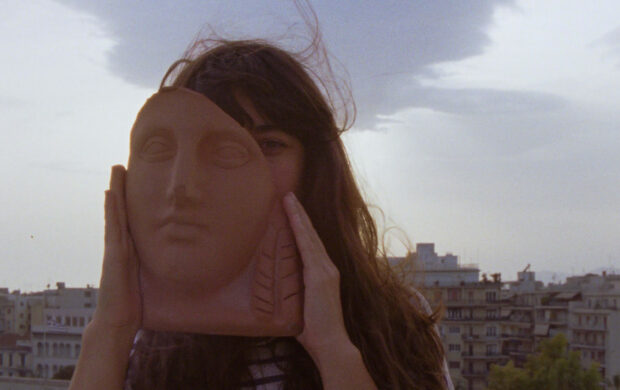
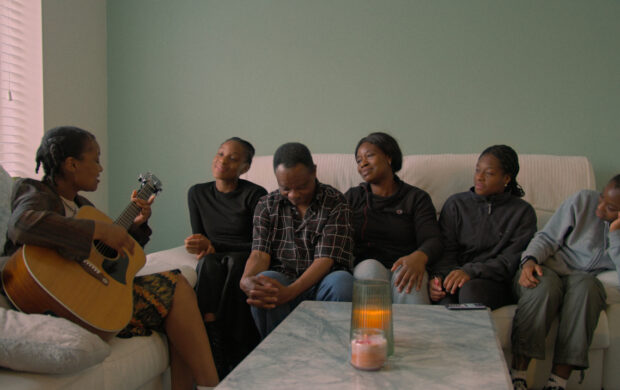
Far from these guiding lights and the 1970s era of struggles and hopes, Coco Tassel filmed three women artists striving to create their own singular paths, resisting normative injunctions, while in Athens, Daphné Hérétakis acts as spokeswoman for a call to destroy the Parthenon and all ancient sites as a way of preventing the country from stagnating in its heritage and, beyond that, our contemporary societies. And against the burden of the past, colonisation and a paralysing Catholic tradition, a current emerges on the Irish music scene, in which folk music encounters punk, hip hop and contemporary music.
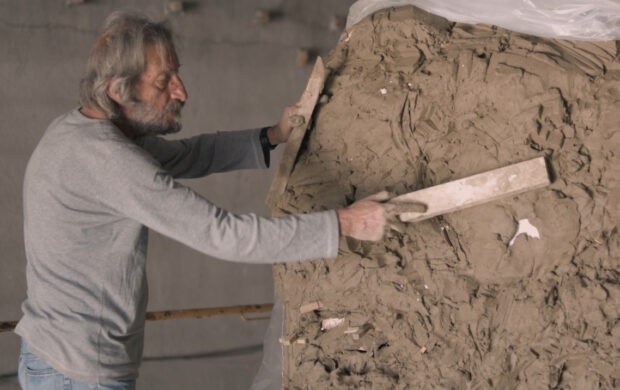
The trajectory of Syrian sculptor Assem al Basha is deeply rooted in his country’s violent history and spans his studies in the Soviet Union to his flight from the country, the destruction of his works by Bachaar al-Assad’s henchmen, and his brother’s murder.
Yet, his whole being is inhabited by the force of light and the Syrian mountains. From all this, a final work is born, a work of resistance that through the face of the ancient poet Al Maari, reveals the clairvoyant face of Arab philosophy. Human struggle is often embodied by an emblematic figure whose story, by becoming a legend, becomes that of an entire people. In We, People of the Islands, the trajectory of Amilcar Cabral, leader of the national liberation struggle in Cape Verde and Guinea-Bissau, is overlaid by the stories of the men and women who have dedicated their lives to the same combat. The film also depicts a time when Pan-African solidarity and beyond defeated the West’s colonial empires. Today, the collective struggle is still driven by men and women who rise up against power in different African countries.
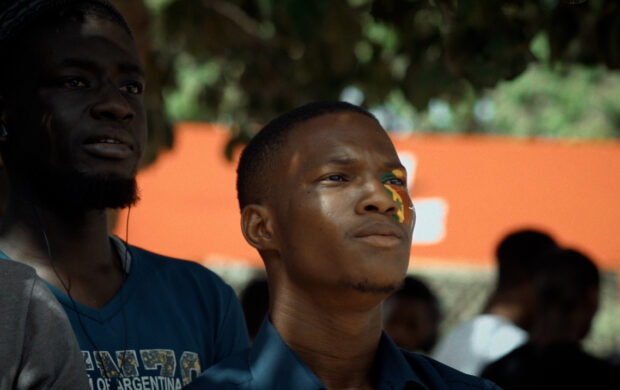
In Senegal, Abdou Lahat Fall takes us into the heart of the FRAPP during the run-up to elections. Protests are ongoing and activists are arrested, but others are there to take their place. For almost ten years, young Africans have been protesting, driven by a shared political awareness and advocating for civil activism on the ground to counter political parties which they see as corrupt, authoritarian and ineffective.
How should this political awareness be expressed in the here and now? This is the question that the last two films of this selection ask us. On the one hand, by sociologist Geoffroy de Lagasnerie, whose thinking and political commitment nourish each other and translate into action. On the other hand, by the artists collective which is facing a dilemma: do their anti-colonial films have a place on Brussels Airlines?
Catherine Bizern
-
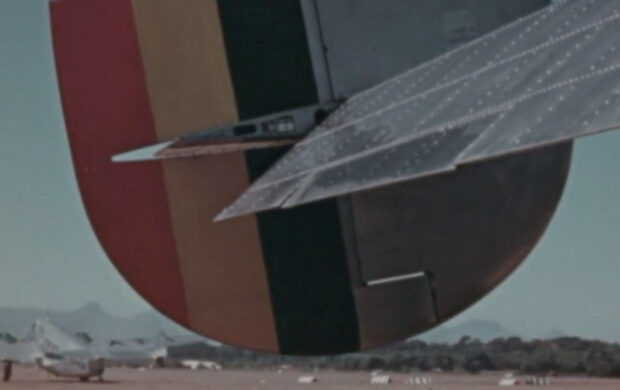
What We Said to Brussels Airlines
Collectif Faire-Part