Luke Fowler
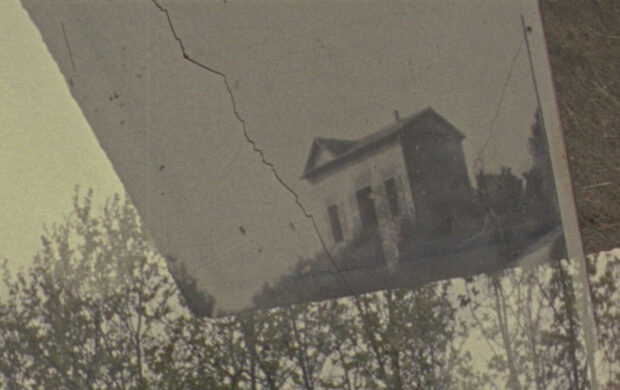
Luke Fowler’s films are no less convinced that things have a soul, and in themselves, they maintain a particularly vibrant relationship with memory. Sustaining this vibration, affording it all the necessary attention, is the intent running through them. When Fowler embarks on the portrait of Martin Bartlett, Margaret Tait, or Edward Palmer Thompson, it is not only to shield a little-known genius of avant-garde music, a great filmmaker and a militant intellectual from oblivion. It was also to reveal, through images of the places they inhabited, the trembling vestiges of presence, a memory preserved less by thought than by the sensory world – “the pale palpitation of things” in the words of Cézanne, who was speaking like a geologist and whose genius Gasquet likened to an “impassioned hallucination”. The work of a rigorous documentary maker and ghost hunter: which is not contradictory, quite the contrary.
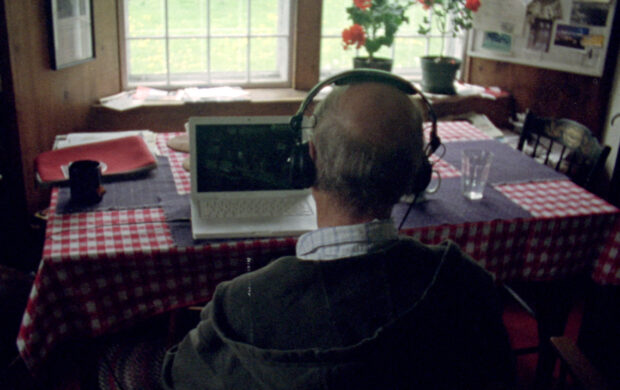
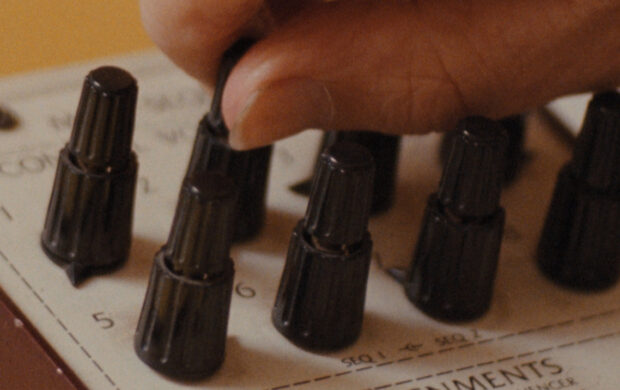
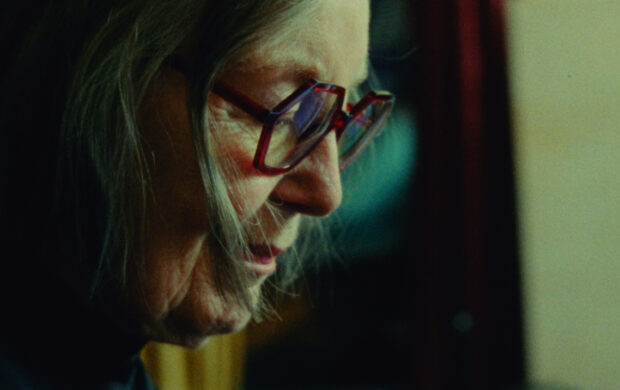
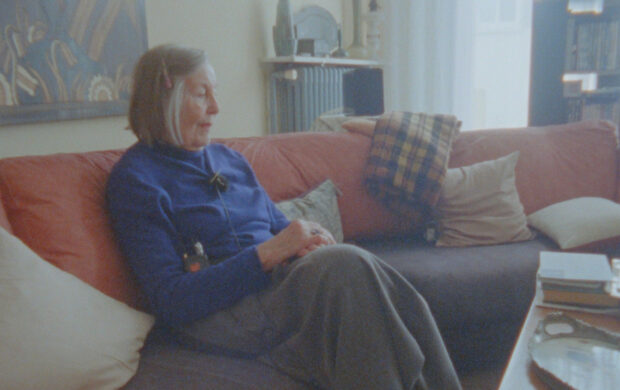
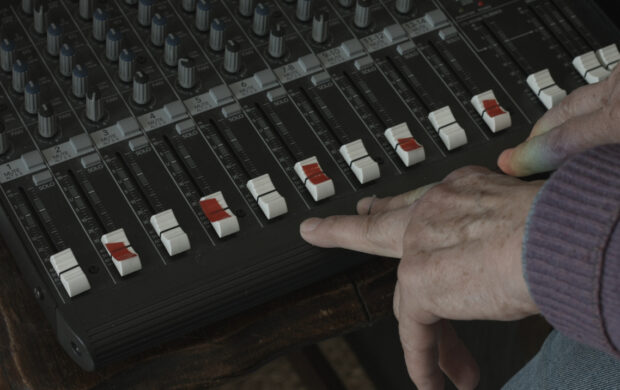
To cite one more quote here, this time from one of Fowler’s films: “Objectivity is the least realistic thing of all”. Taken from a tape whose manipulations are admiringly filmed close-up by Fowler’s Bolex camera, the voice is Luc Ferrari’s, a pioneer of avant-garde music, and more particularly of this part-documentary, part-dreamlike approach dubbed “field recording”. The still extremely beautiful and sensitive film, in two parts and titled N’importe quoi (meaning “anything goes”) is a twofold tribute. A tribute to Luc Ferrari, whose radio pieces attain the pinnacles of the history of music and documentary, but this tribute is only secondary. It is embedded in another tribute to Brunhild Meyer-Ferrari, who is still living, and the film serves as a reminder of the cruel injustice were she to be remembered solely for her role as wife and collaborator: Brunhild (the film, which calls her affectionately by her first name, shows her at work) is a genius in her own right. The memory of Luc Ferrari materialises through that of Brunhild as much as the memory of Brunhild Meyer-Ferrari materialises through Luc’s – and the whole materialises through the vibration of the magnetic tapes, even in the warm grain of Fowler’s camera.
Music, and this music in particular, is a more fitting reference than painting if we are to understand Luke Fowler’s filmography, which counts just one portrait of a painter and myriad portraits of musicians. “Field recording” is a genre at the intersection of musique concrète (Luc Ferrari belonged to the Groupe de Recherches Musicales founded by Pierre Schaeffer) and ethnographic work (Alan Lomax, who tirelessly collected songs around the world). For Luke Fowler, himself a musician (who, by happy coincidence, bears the same initials as Brunhild’s husband), it is not simply a subject: it is a twofold method. Twofold, because while the image and sound in his films have the same goal, both advance side by side – he then picks up the editing work of assembling the silent harvest gathered by the 16mm camera and the acoustic harvest from the microphone.
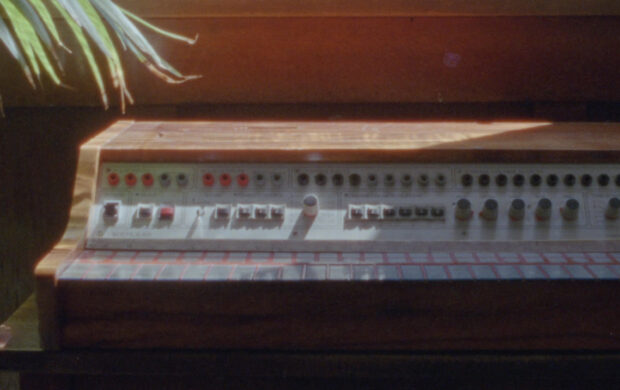
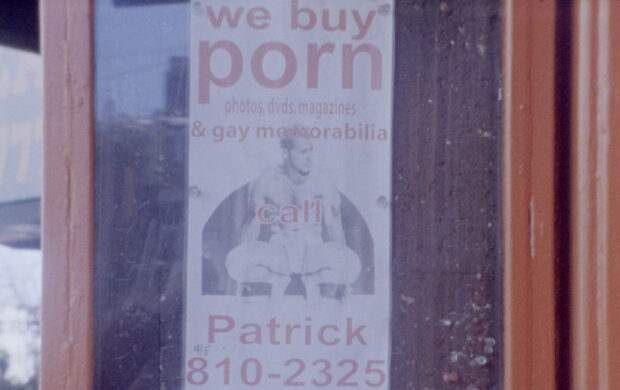
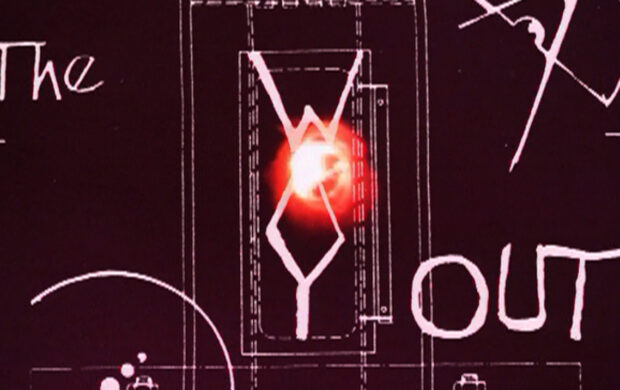
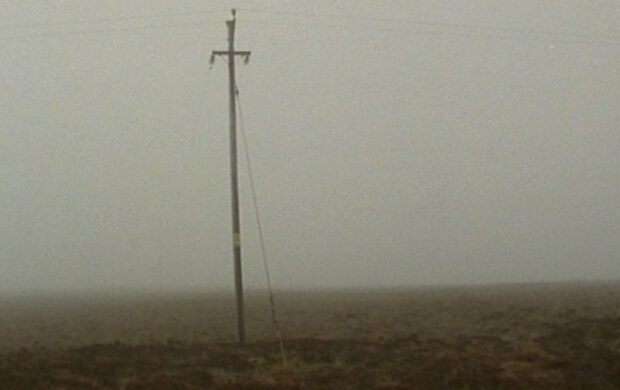
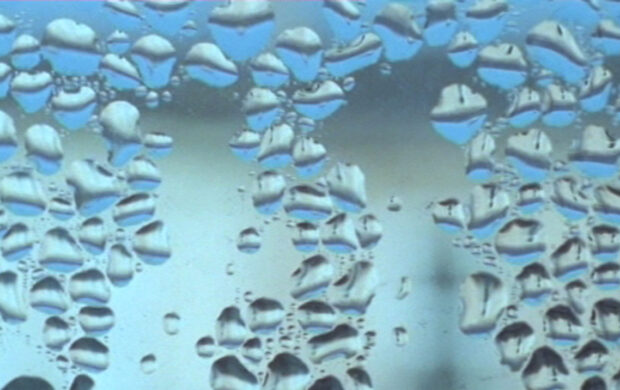
Made in collaboration with sound artists (Lee Patterson, Toshiya Tsunoda and Eric La Casa), the tryptic A Grammar for Listening sums up this method. Investigating various physical phenomena (fluctuations on the surface of water, the trembling of electric wire…), eye and ear unite in an unusual interest in the murmurings of the world. The gaze listens, the ear looks, in a fascinating session of documentary hypnosis. The film portraits of Patrick Cowley, Martin Bartlett and Xentos Jones (Patrick, Electro-Pythagoras and The Way Out respectively) have a common strand: all not only portray fringe and pioneering artists but also, through them, they celebrate a precious sensitivity to the pulsation of things. The machines they handled and sometimes even invented (synthesises, handmade electronic artefacts) appear in the films less as technology and more as pure and simple magic, searching for the secret of life in the secret of waves, as a distant echo of Cézanne’s “palpitations”.
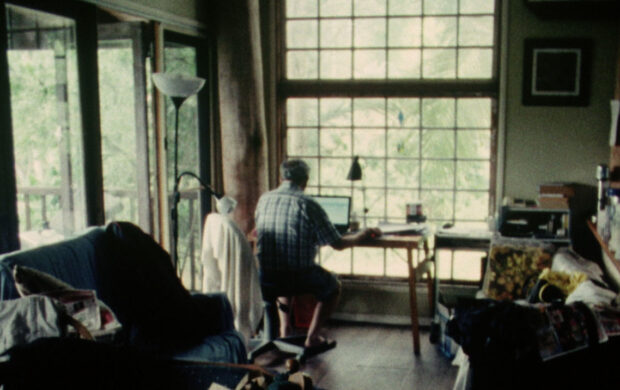
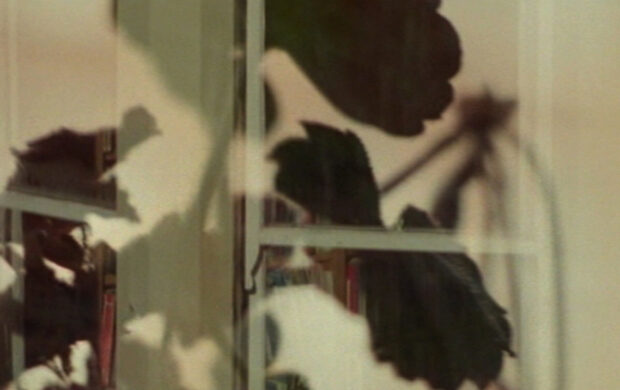
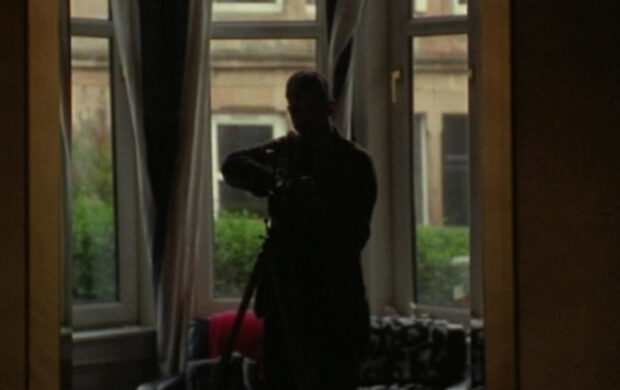
The fact that Fowler himself manipulates similar machines in his work as a musician doubtless contributes to the highly intimate understanding that these films have of their subject. But the same is true of his portraits of filmmakers, activists or ordinary folk (the series Anna, David, Helen, Lester). It is also telling that Fowler and his camera appear more than once in the reflection of a mirror or window, or simply as a shadow on a wall. Luc Ferrari’s lesson is followed to the very end: objectivity is no help to anyone wanting to grasp something of reality. It is only possible to look (or listen) subjectively, and memory cannot be other than affective. This is what explains why Luke Fowler’s many portraits systematically garner their material in the places where those he films have lived and worked (Derek Jarman’s house in Being Blue, Patrick’s studio). It also explains why these portraits constantly slide from one detail to another, totally in step with the visual or auditory flashes that struck the filmmaker’s sensitivity while he was filming.
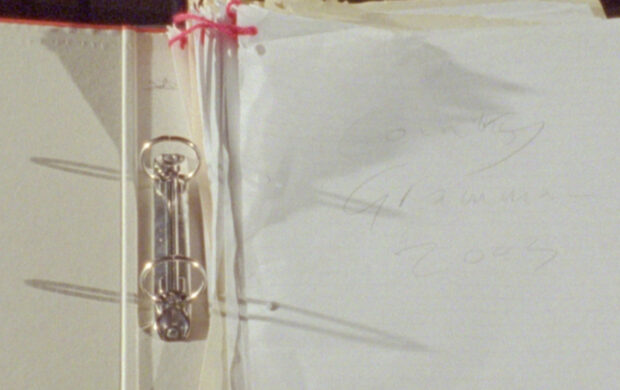
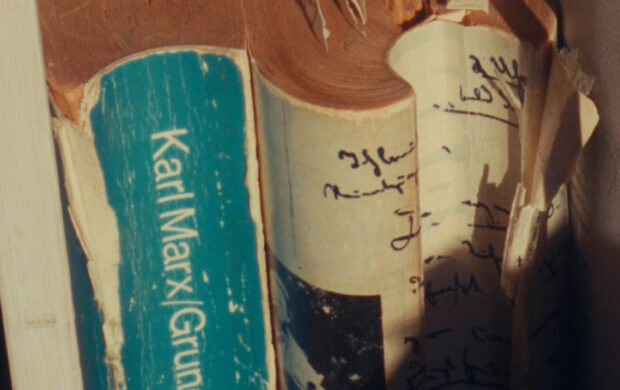
The same fragmentary logic runs through all these films, each harvesting diverse impressions that have no immediately obvious connection to the subject (for example, the forest details woven into the very political subject of a film like All Divided Selves). Snatching up every spark of beauty (“glimpses of beauty” says the finest film of Jonas Mekas, who comes to mind more than once), Luke Fowler’s work is a composite wonderland where, without distinction, he mixes together close-ups of handwritten pages and wide-angle shots of landscapes, ordinary ornaments and misty skies, the voice of a wilted rose (Country Grammar), magnetic tapes and a cat’s belly. For anyone who can see and hear, everything is documentary, so everything is magical. Everything, which is to say: “anything” (Luc and Brunhild Ferrari, them again).
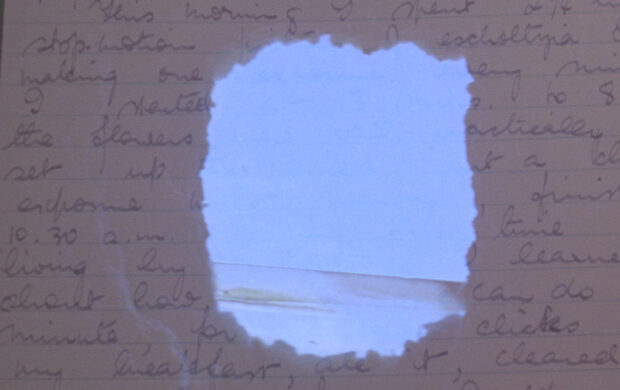
All of these images (both visual and auditory, to insist one last time) nonetheless share a commonality in that they are always infinitely tactile and, unsurprisingly, seem particularly interested in hands (turning the pages of a notebook or grasping some object or other). To feel the palpitation, to experience the frequencies that travel through the places, the eye and ear must be able to touch. To preserve the memory of these precious artists, these courageous inventors that the world has tried to sideline, Luke Fowler’s films urge us to look for their intact presence on the margin of things, there where so many films forget to look, and hear nothing.
Jérôme Momcilovic
Luke Fowler has chosen to introduce each of the sessions in this program with a film by an artist accomplice.
-

 Luke Fowler #4
The Poor Stockinger, the Luddite Cropper and the Deluded Followers of Joanna Southcott
Luke Fowler