The Rib of the Greater Bay Area
大湾区之肋
- 2026
- Hong Kong SAR China
- 70'
- No dialogue
-
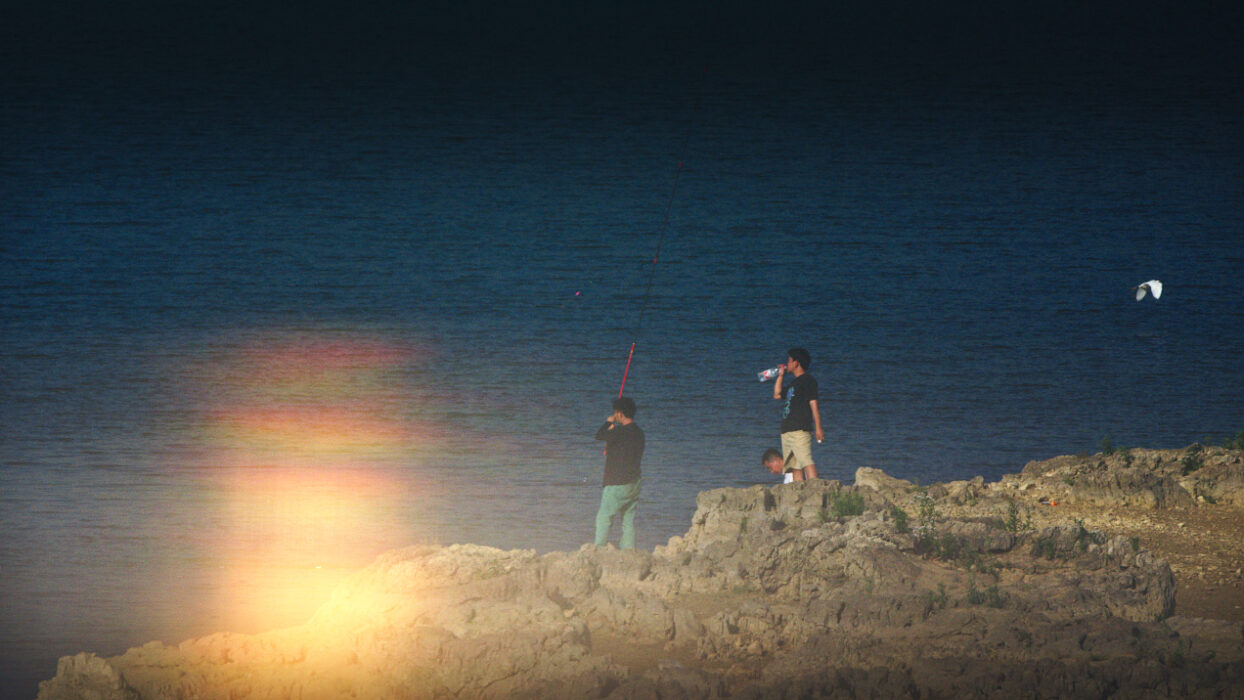
© Commissioned by M+, Hong Kong. Image courtesy of the artist, Zhou Tao -
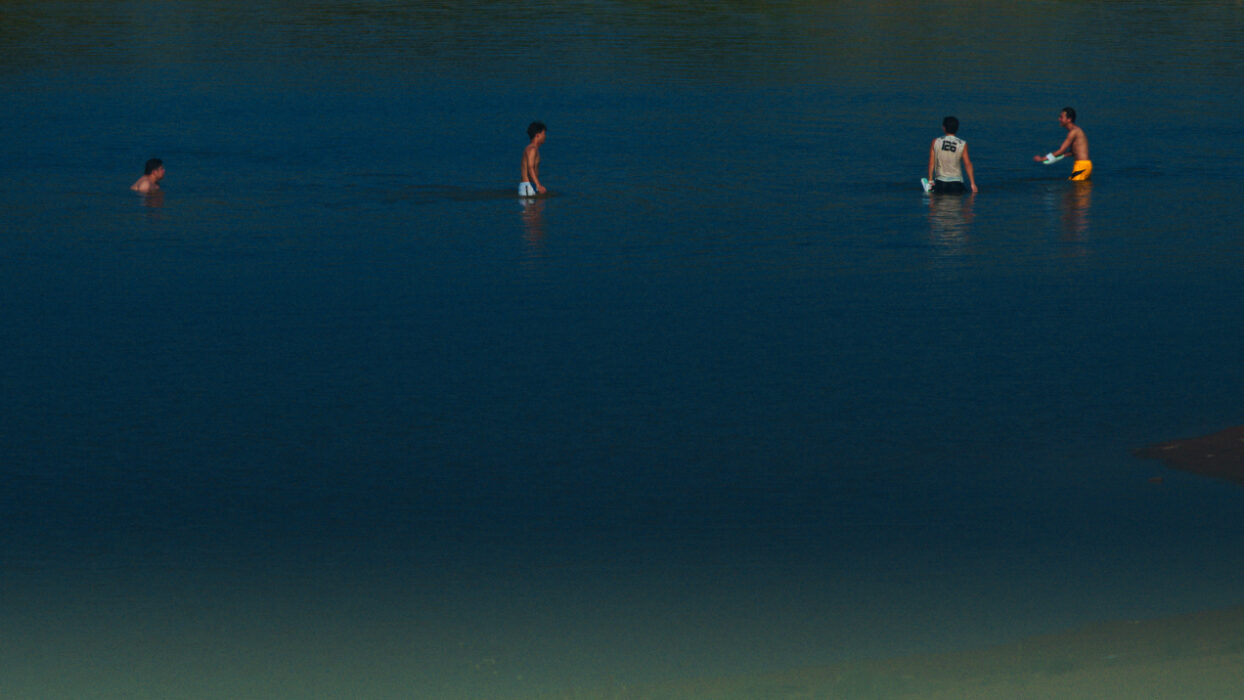
© Commissioned by M+, Hong Kong. Image courtesy of the artist, Zhou Tao -
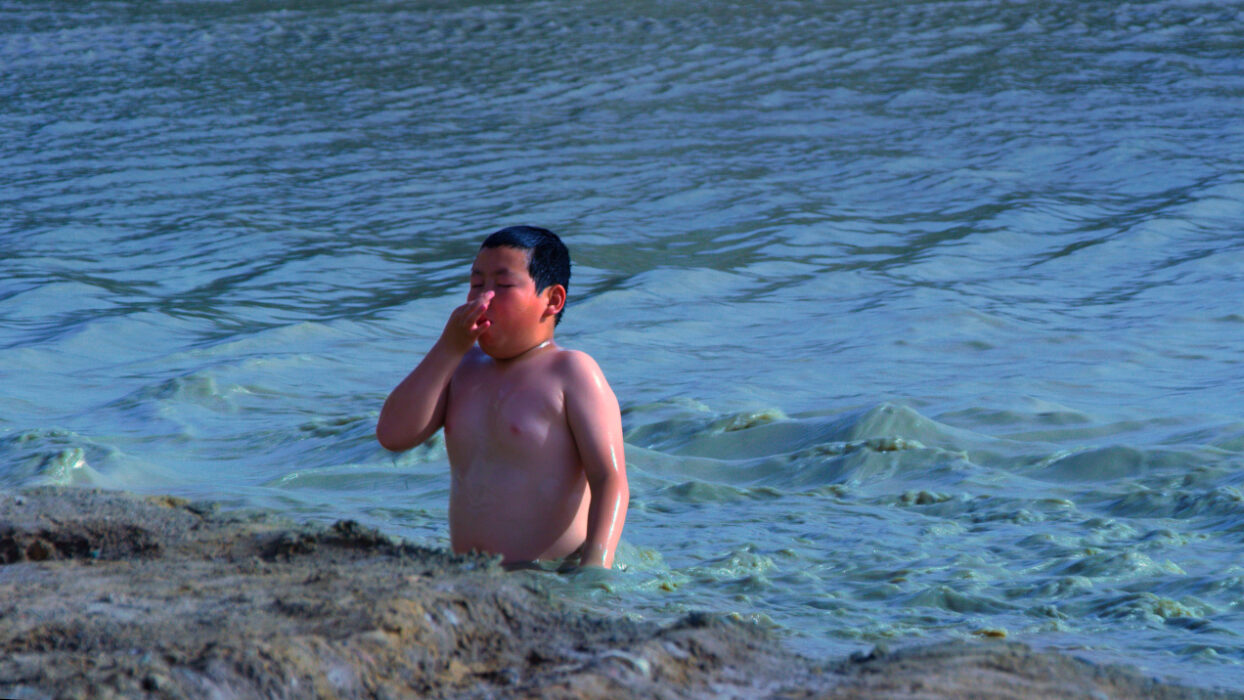
© Commissioned by M+, Hong Kong. Image courtesy of the artist, Zhou Tao
Sampling waterside vistas from the Pearl River to Victoria Harbour, the film unfolds as a scroll across the Guangdong–Hong Kong–Macao Greater Bay Area. Infra-sensory vibrations become reverberant layers, sensing the distance produced by total interconnection.
Light rain falls on the surface of a river. The camera briefly moves upstream, then changes direction when a swimmer appears, then drifts along China’s Greater Bay Area in a continuous pan that lasts over an hour. Zhou Tao’s new film uses water both as a measure and a metaphor for the passage of time, and it unfolds like a scroll of shifting landscapes.
But a reel that is constantly interrupted: by surreal, hyperreal or abstract flashes; by shifts in scale and elevation; by sudden shifts from wide shots to close-ups, or even extreme close-ups; by such a variety of scenes – bucolic, urban, rural – that it is hard to believe they could have been captured in a single take. The soundtrack oscillates between the sounds from outside and the almost imperceptible vibrations from inside a machine. Zhou Tao playfully exploits the interferences that disrupt the sense of continuity, creating effects that oscillate between confusion, surprise and wonder. Composition, depth and movement thus become the instruments of a shift in perspective, where visual invention meets a politics of the gaze.
The extension of a very short film that was projected onto the giant facade of the M+ museum, overlooking Hong Kong’s Victoria Harbour, The Rib of the Greater Bay Area takes its starting point from tourist sites identified on an app called Little Red Book, from which it continually diverges to explore the limits of the visible and the margins of representation. For over a decade, the Pearl River Delta has been at the heart of a vast programme aimed at turning the region into a global hub for digital innovation. An ideal of total interconnection thus shapes this landscape. Faced with this growing technological sophistication, Zhou Tao works as a filmmaker does: he revisits the essential questions about the image and lays bare its infrastructure, pushing the logic of realism to the point where the digital image threatens to lose all form.
Antoine Thirion

Zhou Tao was born in 1976 in Changsha, Hunan Province. He studied at the Guangzhou Academy of Fine Arts and received a bachelor of fine arts in oil painting in 2001 and a master of fine arts in mixed-media studies in 2006. Currently lives in Guangzhou.
Zhou Tao finds visual and narrative materials for his arresting film works in the places and communities he encounters, and the narration of the film is often developed from the accumulation of the encountered moments. There is no single entry to the practice of Zhou Tao, through often subtle and humorous interactions with people, things, actions, locations and situations, Zhou’s videos invite us to experience the multiple trajectories of reality—what he once called the “folding scenario” or the “zone with folds.” Although all of his footage captures actual scenes, the poetics of Zhou’s visual narratives dissolve the division between fact and fiction. For him, the use of moving image is not a deliberate choice of artistic language or medium, instead the operation of the camera is a way of being that blends itself with everyday life.