Palestine: Ways of refusal
One possible answer may lie in the title chosen for this programme, shaped in collaboration with the Palestinian artist-filmmaker Jumana Manna: Ways of Refusal. Not the pretence of labelling as revolt that which is not one, but rather the very essence of refusal a form of self-assertion: an eminently positive act and the starting point in any dialectic. This is precisely what cinema can offer us: a space of refusal where the various constraints imposed on the Palestinian people can be defied, and the act of self-representation fully embraced. From the militant cinema of the 1970s to more recent films imbued with lived and sensory experiences, these works, in their varied forms, embody the full extent of Palestinian determination and a resolve not to sacrifice dignity beyond the material aspects of their condition.
More than this formal diversity being a mere matter of filmmakers’ individual preferences, it is, above all, a product of time and place: like the military resistance, Palestinian cinema was born in exile, after the efforts of the pioneers of the 1930s were cut short by the Nakba. In 1967, the Arab defeat in the Six-Day War sparked a new wave of enthusiasm among intellectuals, who emerged from their torpor to embark on a genuine cultural and political Renaissance (Nahda). The ambition to put cinema at the service of the Cause was declared unequivocally. First in Jordan, then in Lebanon where the PLO took refuge after Black September, filmmakers from across the region came together through the various radical left-wing political groups that funded their films. For some thirty years, Beirut was the epicentre of the Palestinian struggle, through both the rifle and the camera. It was against this backdrop, in 1974, that Mustafa Abu Ali – co-founder of the Palestinian Film Unit under the auspices of Fatah – made They Do Not Exist, in order to challenge the Israeli colonial narrative. The film’s title echoes Golda Meir’s famous phrase (‘There is no Palestinian people’) to demonstrate, in nine acts, how Israel combines rhetoric with action to exterminate the Palestinians both narratively and literally: the annihilating words of Israeli leaders are superimposed upon the destruction of the Nabatieh refugee camp in southern Lebanon, and set to a concerto by Bach. It is therefore not merely a matter of making political films, but of making films politically, and of following in the tradition of modern revolutionary cinema (Abu Ali was Godard’s assistant) through a meticulous formal approach and a particular focus on montage. These qualities are accentuated in Hundred Faces For a Single Day; one of the few surviving films by the Lebanese director Christian Ghazi, whose entire filmography was destroyed – partly by censorship; the rest burned by militiamen during the civil war. A hybrid film, it blends narrative with documentary footage through syncopated editing and sound that is frequently out of sync. Hundred Faces For a Single Day takes a stance both aesthetically and politically by illustrating the structural anti-capitalism of the era’s decolonial cinema. While the films produced during the Palestinian struggle of the 1970s were not merely didactic and militant but often deeply reflective – as evidenced by Godard’s Ici et ailleurs, which needs no introduction – film production moved away from overtly political themes from the 1980s onwards with the emergence of a Palestinian cinema within Palestine.
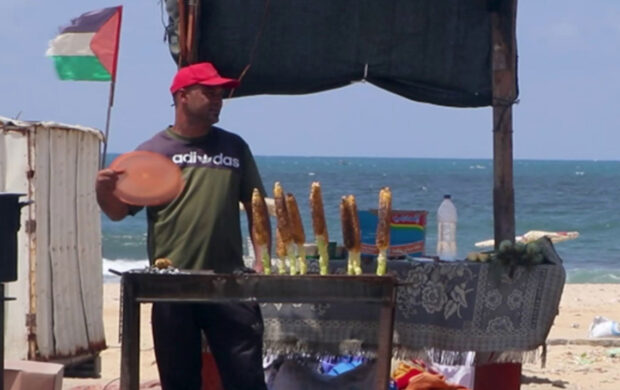
The first feature film shot on location by a Palestinian director since the Nakba, Fertile Memory heralds a cinema firmly rooted in reality and personal experience. Blurring the lines between documentary and fiction (or neither one nor the other), Michel Khleifi crafts an intimate portrait of two women from different backgrounds, yet united in the same struggle for freedom. There is no need for political slogans: the plight of Palestinian women is evident in every mundane event of daily life, and their struggle surfaces in every gesture. The focus on personal stories reflects an ambition to rehumanise the victims of abstract political concepts – imperfect victims largely overlooked by the West, much like the four ordinary men in the film Gazan Tales, shot on the eve of the genocide. Weaknesses are no longer concealed behind rousing speeches, and the sense of defeat is more openly acknowledged: this is the subject of Mahdi Fleifel’s short film, I Signed the Petition [which will be shown as part of the ‘Why the cultural boycott?’ panel discussion.] The assertion of the right to self-determination through the image is a constant feature of Palestinian cinema, but in recent works it is expressed more through self-narration – as evidenced by the recurrent use of first-person voice-over. Films are becoming more intimate, while understanding the intimate to be the reflection of a political condition that undermines intimacy. But the first-person singular can also be a way of subverting the role that Palestinians have traditionally been assigned. This dichotomy can be traced back to The Dream, filmed by the Syrian director Mohammed Malas in Lebanese refugee camps in 1981. In asking Palestinians to recount their dreams, Malas restores them to that place where the enemy seeks to impose a nightmare: in dreams, martyrs can visit you, you can return to Palestine; the dream space, brought to life on film, becomes another possible narrative. Basma al-Sharif’s Home Movies Gaza and Mahdi Fleifel’s A World Not Ours also explore intimacy by working with family footage: that of Gaza and of the Ain el-Heloueh camp in Lebanon, which the young Fleifel filmed over almost two decades. ‘For some reason, everything had to be recorded’: a need to leave a trace out of fear of erasure, but also a means of ensuring the circulation of images among Palestinian families who are scattered around the world.
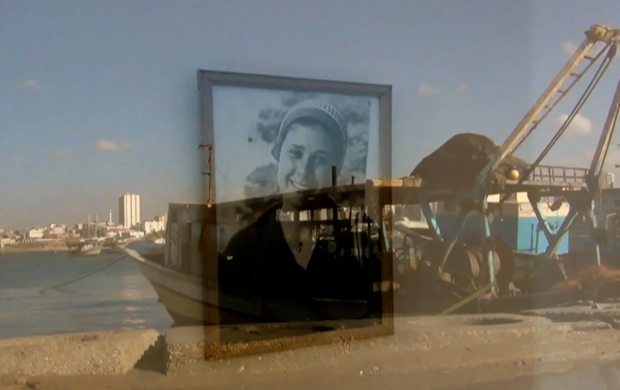
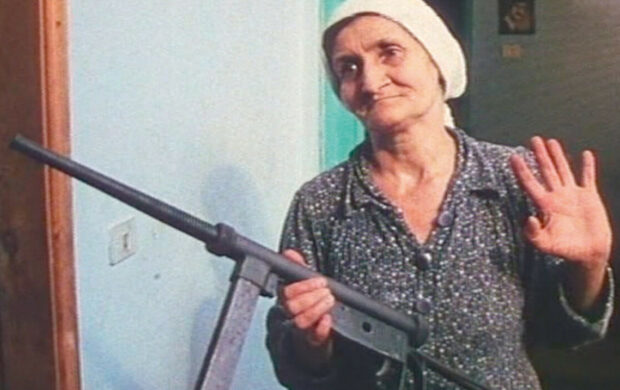
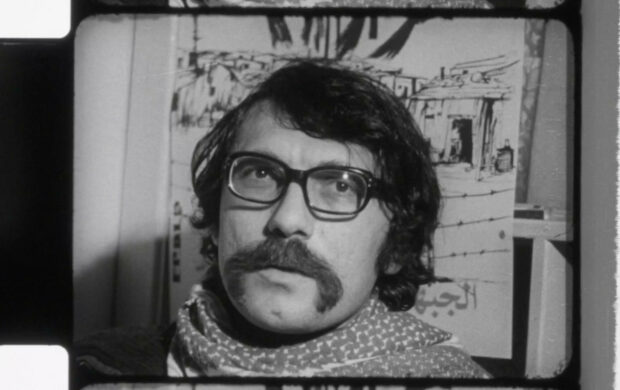
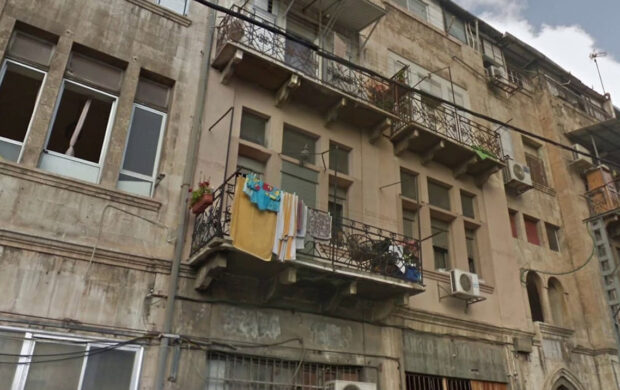
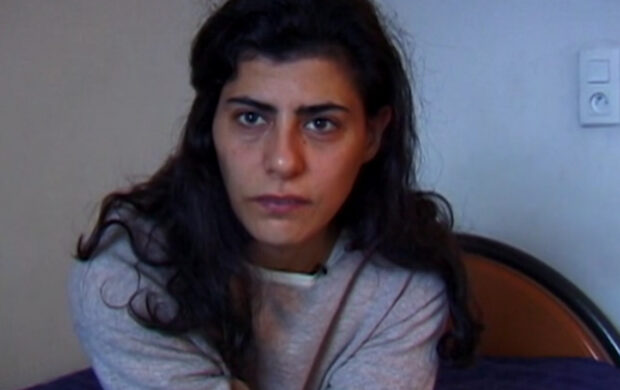
Of course, the notion of exile runs through the entire programme: woven from telephone lines, letters sent, and Zoom discussions superimposed upon collages of images taken here and elsewhere. Through cinema, distance may be diminished but never fully concealed. This separation from the land and from others also underpins the Palestinian experience, that of the 1948 refugees whose right of return has been denied, just like that of the inhabitants of Gaza and the West Bank, often refugees in their own country, where borders have been erected between cities. Basma al-Sharif’s highly contemporary Morgenkreis (2025) explores, through the morning routine of a father and son, the difficulty of integrating into European countries – in this case Germany – personified by an inquisitive voice whose speaker is never uncovered. Extended across the film’s several parts is a sense of loss: that of a disappearing language and of those almost invisible little things that one inevitably leaves behind. ‘Everything and nothing’: is how Souha Béchara, a Lebanese resistance fighter, describes to the videographer Jayce Salloum (who came to interview her in her room in Paris shortly after her release from prison, for Untitled part 1: everything and nothing) that which we lose and that which we carry with us into the distance. Not only the distance of exile but also that which defines every stage of the struggle, including ten years of detention in an Israeli prison. Rootlessness is a central theme in Simone Bitton and Elias Sanbar’s documentary, Mahmoud Darwish: As the land is the Language, in which the poet explains that he began to feel like an exile even before leaving Palestine. Ultimately, it is poetry that gives him a home. ‘My ghost, here, speaks to the essence of my being, there’: this is perhaps also the potential of cinema, a phantom-like art form if ever there was one. Indeed, a spectral quality recurs across the programme and haunts Razan Al-Salah’s beautiful short film Your Father Was Born 100 Years Old, And So Was the Nakba. We wander through the streets of Haifa using Google Street View: the only way Grandmother Oum Amin can visit Palestine. The filmmaker superimposes onto these alleys – which are already ghostly by nature – images from the past: fleeting and imperfect apparitions. Oum Amin searches for her little boy, calling his name across the street: a cry that echoes out by voices from days gone by. In limbo: Palestine.
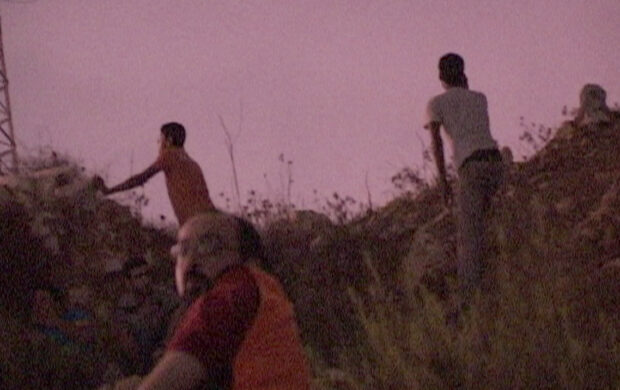
Set against what has vanished lies the black screen of the missing image. And, as in Rithy Panh’s films, the question arises of how to inhabit it. This is what is at stake in Ma’loul Celebrates Its Destruction, Michel Khleifi’s documentary about the village of Ma’aloul, which was destroyed in 1948. The film features a painting, filmed in close-up, which we traverse at the whim of memories. There is archival footage, but it’s impossible to tell whether it was recorded in that village or another. Anyway, what does it matter… The film navigates around absence without ever claiming to fill a void, for Palestinian cinema is careful not to assume that the challenge of representation is resolved simply by showing. It is not merely through its absence that the image is lacking, but also because it carries within it an irreducible form of opacity – “There are things that cannot be translated, things that are not transparent: not because they are obscure, but because the other is other,” explains Palestinian cinema specialist Nadia Yaqub in the voice-over of Oraib Toukan’s film Via Dolorosa, dedicated to Hani Jarrawiah and the early work of the Palestine Film Unit. Yaqub detects in these pioneering filmmakers an awareness that the image alone is not enough, and a need to guide the viewer’s gaze in order to reveal what it contains. So, the image is stretched out, sometimes down to the pixel. Every recess is explored in When Things Occur, another film by Toukan. As the surface of images are traversed, we hear the voices of those who captured them: a reflection on representation itself. There is also something in this obsession with capturing as much territory as possible: Palestinian cinema is punctuated by long car journeys where not a single detail of the landscape is to be missed. Not a single building, not a single piece of graffiti, not a single satellite dish. It is worth remembering that this setting is also one of confinement, where the camera comes up against checkpoints when it is not thrown off balance. This is the journey depicted in Infiltrators, a feature film by Khaled Jarrar that follows Palestinians over a four-year period as they search for gaps in the wall surrounding the heavily militarised Qalandia checkpoint in the West Bank. Some go to work with expired permits, others visit relatives in hospital; women want to pray at Al-Aqsa, and the road movie goes round in circles within an enclosed space. While circularity and repetition punctuate the films in the programme, these patterns of iteration come into tension with the constant threat of impending destruction. Each image seems suspended between the material future of what it represents and the anticipation of shifting viewing contexts. This tension is at play in Rosalind Nashashibi’s Electrical Gaza. The montage of different views of the enclave feel like vignettes of a mythical space in time: June 2014, a month before the deadly offensive of summer 2014, and almost ten years before that which would destroy almost the entire Gaza Strip.
The successive waves of destruction across the Palestinian territories appear like forced submission. Cameras follow this movement to see what is happening at ground level, where the last stones of the village of Ma’aloul lie, where the hands of infiltrators slip through to pass bread on the sly or allow a mother and her daughter to touch fingertips beneath the closed door of a border crossing. By descending to ground level, the cameras capture the dust of destruction as much as they capture the very heart of the people’s deep-rootedness. For it is precisely there that the Palestinians’ unshakeable attachment to the land lies, in spite of all the strategies of land grabbing and attempts to uproot them. This is not merely a matter of legal and illegal dispossession of land, but also of its deliberate distortion through the process of colonisation. In Ma’loul Celebrates Its Destruction, an elderly man standing amid the ruins, trying to locate his house by orienting himself with clumps of olive trees and cacti, is disturbed by the pine trees that are transforming the landscape. By seizing upon environmental issues, the occupier has appropriated the land and prevented return: Ma’aloul is covered by the Keren Kayemeth Leisrael, a national fund tasked with purchasing land to reforest and ‘protect’ it. Thirty-seven years after the destruction of his village, the former resident laments the disappearance of the orchards he was unable to tend: fig, almond, apricot and mulberry trees… In their place, a plaque – in French – beneath a withered tree: ‘grove in memory of Aron Sojcher’. Concern for the land is not merely performative. The ecocidal dimension of colonialism often surfaces on screen, as in Basma al-Sharif’s We Began by Measuring Distance, which depicts nature contaminated by bombs. Mary Jirmanus Saba and Tareq Rantisi even re-examine the act of resistance in the age of collapse in Mahdi Amel in Gaza: On the Colonial Mode of Production, which re-situates the Marxist philosopher’s theories within the context of ecological disaster and makes the link between colonialism and extractivism, while implying a need to find new terms for our commitment. In his book Enfant de Palestine, the Palestinian intellectual and farmer Omar Alsoumi reframes the colonial question within the field of political ecology by calling for the seeds of Palestine to be sown everywhere. ‘The earth is too small for us,’ writes Darwish; and perhaps this is the role of cinema: to broaden its horizons.
Lola Maupas
-


 Palestine #2
Mahdi Amel in Gaza: On the Colonial Mode of Production
Mary Jirmanus Saba
Tareq Rantisi